How to Make Sauerkraut at Home (Easy Fermentation for Beginners)
- Bamterest Finds
- Feb 1
- 3 min read

Sauerkraut is one of the simplest and most rewarding fermented foods you can make at home. With just cabbage and salt, you can create a probiotic-rich food that supports gut health and fits naturally into a cozy, homestead-style kitchen.
If you’re new to fermentation, sauerkraut is the best place to start — no special equipment, no starter cultures, and very little hands-on time.
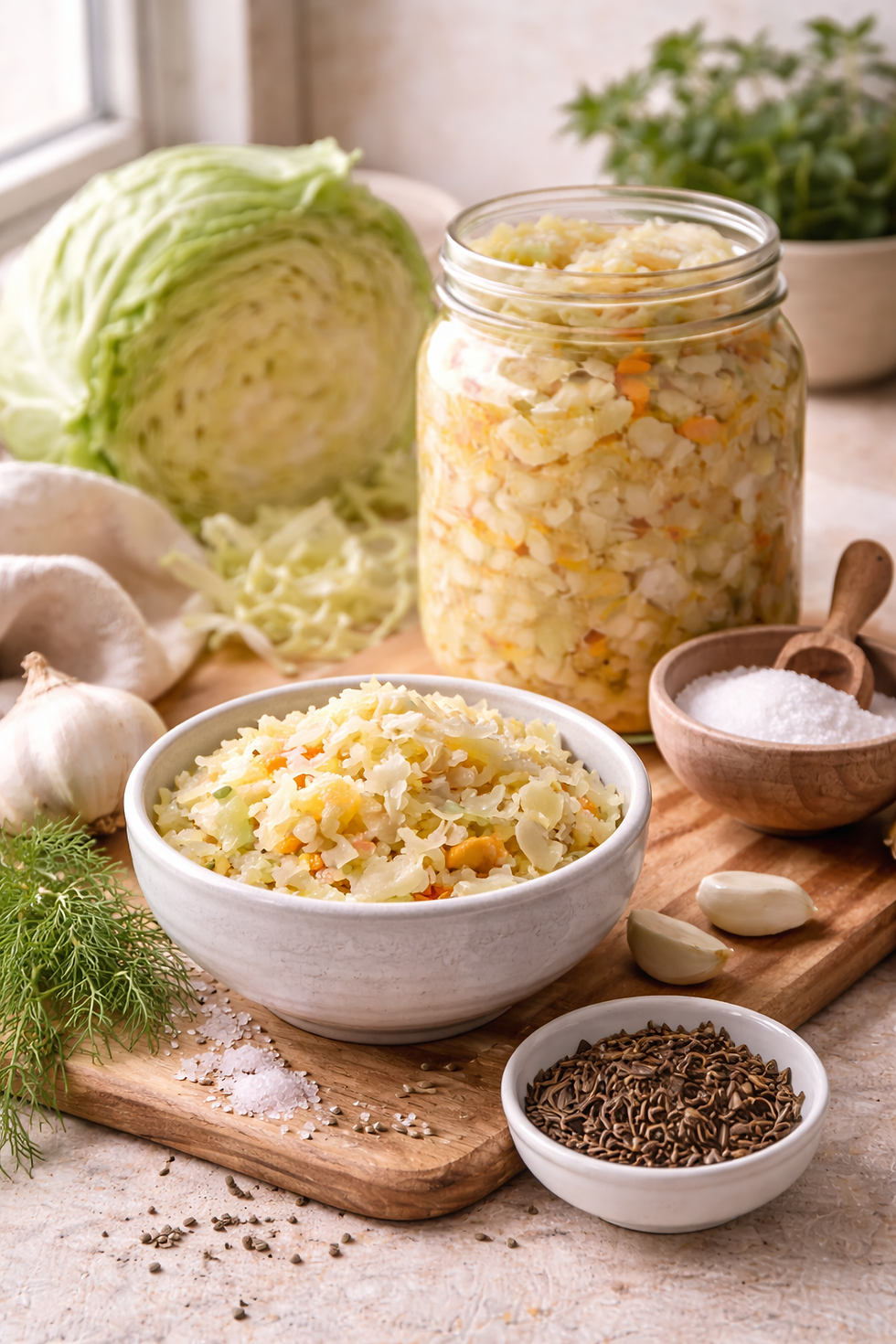
What Is Sauerkraut?
Sauerkraut is finely shredded cabbage that ferments in its own juices through lacto-fermentation. Natural bacteria on the cabbage convert sugars into lactic acid, which preserves the cabbage and creates beneficial probiotics.
The result is a tangy, crunchy ferment that improves with time.
Why Sauerkraut Is Great for Gut Health
Naturally rich in probiotics
Supports digestion and gut balance
Shelf-stable when fermented properly
Made with only real, simple ingredients
Because it ferments at room temperature, sauerkraut is one of the most forgiving ferments for beginners.
What You Need to Make Sauerkraut
Ingredients
Fresh green cabbage
Non-iodized salt (sea salt or kosher salt)
Supplies
Large bowl
Sharp knife or mandoline
Clean glass jar
Optional: fermentation weight or small jar
That’s it — no water, no vinegar, no sugar.
The Basic Sauerkraut Ratio
Use 2% salt by weight of cabbage.
If you don’t have a kitchen scale:
About 1½–2 teaspoons salt per pound of cabbage
This amount creates a safe environment for fermentation while keeping the flavor balanced.
Step-by-Step: How to Make Sauerkraut
1. Prepare the Cabbage
Remove outer leaves and set one aside
Core and finely shred the cabbage
2. Add Salt
Place cabbage in a large bowl
Sprinkle salt evenly over the cabbage
3. Massage Until Juicy
Massage the cabbage with clean hands for 5–10 minutes
It will soften and release liquid
You should see enough juice to cover the cabbage when pressed
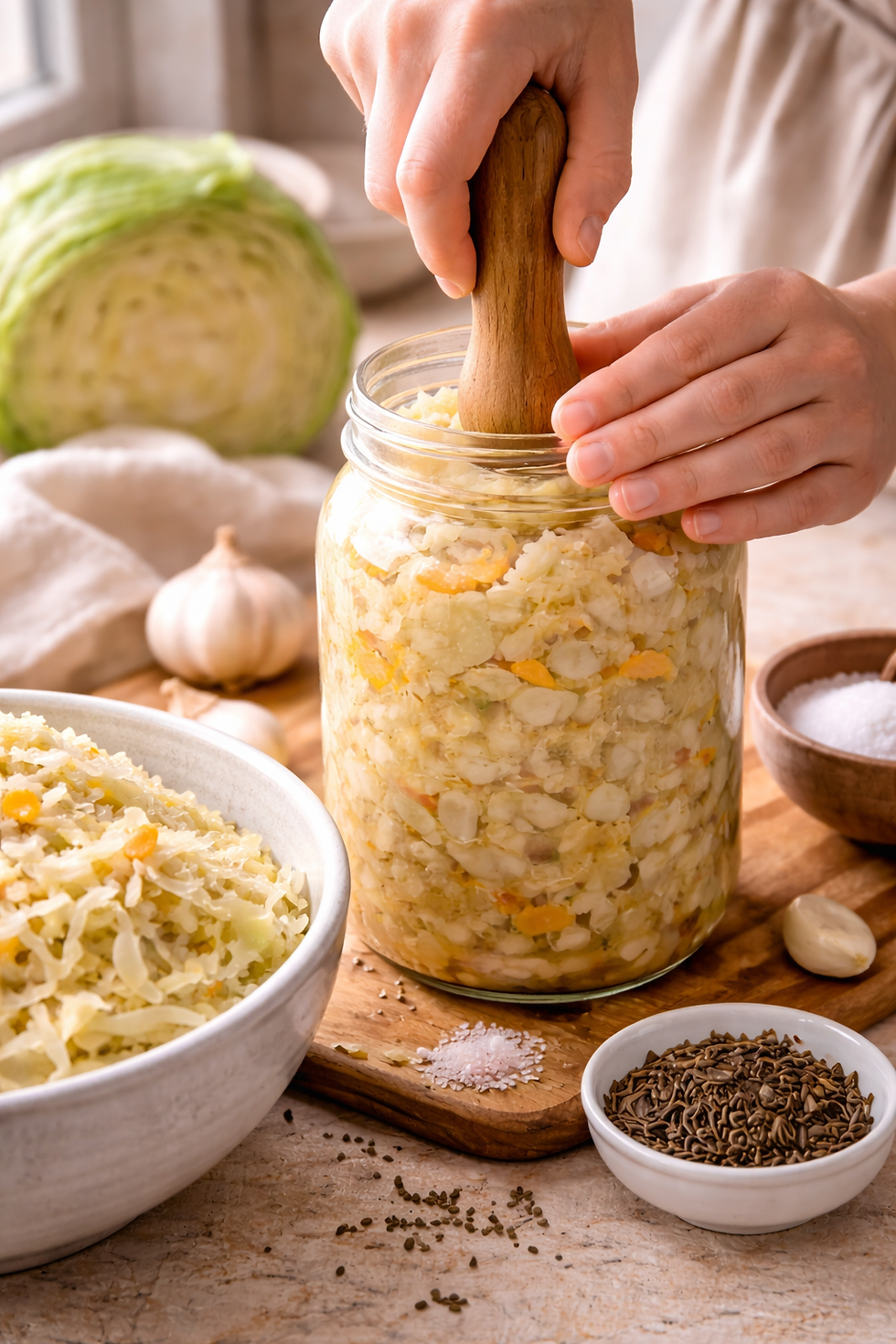
4. Pack into a Jar
Pack cabbage tightly into a clean glass jar
Press down firmly to release more liquid
The cabbage must be fully submerged in its own brine
5. Submerge and Cover
Use the reserved cabbage leaf or a weight to keep cabbage under liquid
Cover loosely with a lid or cloth (do not seal tightly)
Fermentation Time
Minimum: 7 days
Best flavor: 2–4 weeks
Long ferment: Up to 2–3 months
Ideal temperature:
60–75°F
Cooler temperatures = slower fermentation
Warmer temperatures = faster fermentation
Taste as it ferments and stop when you love the flavor.
What’s Normal During Fermentation
✔ Bubbles forming
✔ Cloudy liquid
✔ Tangy or sour smell
✔ Liquid rising or spilling slightly
These are signs fermentation is working.
What’s Not Normal
🚫 Fuzzy mold (green, blue, or black)
🚫 Rotten or putrid smell
If you see fuzzy mold, discard the batch and start fresh.
How to Store Sauerkraut
Once fermented to your liking:
Seal with a lid
Store in the refrigerator
Keeps for several months when refrigerated
Cold storage slows fermentation and preserves flavor.
How to Eat Sauerkraut for Gut Health
Start with 1–2 tablespoons per day
Eat it raw for probiotics (don’t heat)
Add to:
Bowls and salads
Eggs or avocado toast
Alongside cooked meals
If you’re new to fermented foods, start small and listen to your body.
Common Sauerkraut Questions
Is sauerkraut safe to ferment at room temperature?
Yes — the salt and lactic acid protect against harmful bacteria.
Why is my sauerkraut soft?
Too little salt or too warm of a temperature can soften texture.
Can I add flavors?
Yes! Caraway seeds, garlic, juniper berries, or shredded carrots are great additions.
New to Fermentation?
If you’re just getting started, check out our Beginner Fermentation Guide where we cover fermented vegetables, sourdough, kombucha, and more in a simple, no-fear way.
Thanks for being here 🤍
This space is about cozy living, simple rhythms, and real life — imperfect homes, slower days, and learning as we go. I’m so glad you stopped by.
— BAM


Comments