Fermented Foods for Gut Health
- Bamterest Finds
- Feb 1
- 3 min read

Updated: Feb 1
Simple Tips for a Healthier, Happier Gut
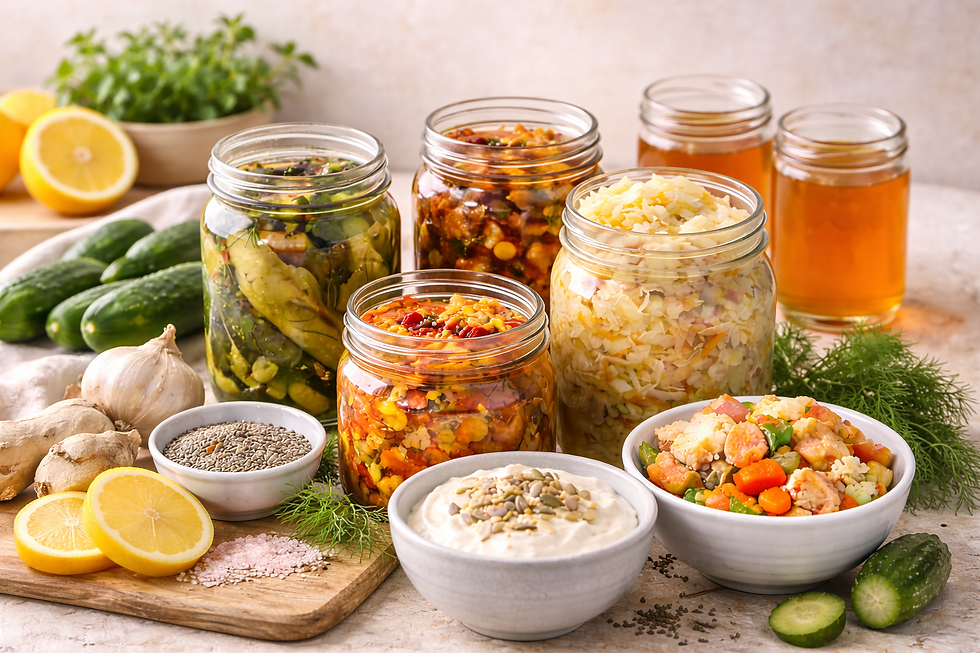
Fermented foods have been used for generations as a natural way to support digestion and overall wellness. From sauerkraut to yogurt to homemade pickles, these traditional foods are enjoying a comeback — and for good reason.
If you’re curious about fermentation but don’t know where to start, this guide breaks it down simply, safely, and realistically.

What Are Fermented Foods?
Fermented foods are made through a natural process where beneficial bacteria break down sugars and starches. This process:
Preserves food naturally
Creates beneficial cultures
Enhances flavor and texture
Common fermented foods include:
Sauerkraut
Kimchi
Yogurt
Kefir
Pickles (naturally fermented, not vinegar-based)
Miso
Kombucha
Why Fermented Foods Support Gut Health
A healthy gut plays a role in digestion, nutrient absorption, and overall well-being. Fermented foods contain live cultures that help support a balanced gut environment.
People often add fermented foods to their routine to:
Support digestion
Add variety to meals
Encourage mindful, traditional eating habits
Small, consistent additions can make a difference over time.
Easy Ways to Add Fermented Foods to Your Day
You don’t need to overhaul your diet to enjoy the benefits.
Try:
Adding a spoonful of sauerkraut to meals
Choosing yogurt with live cultures
Using fermented pickles as a snack or side
Adding miso to soups or sauces
Enjoying kombucha occasionally
Start small and see how your body responds.
Beginner-Friendly Fermentation Tips
If you’re new to fermenting at home, keep it simple:
Start with one recipe (sauerkraut is a favorite)
Use clean jars and utensils
Follow trusted recipes
Allow enough time — fermentation is slow by nature
Store finished ferments in the refrigerator
Homemade fermentation doesn’t need to be complicated to be effective.
🥕 Lacto-Fermented Vegetables (Pickles, Carrots, Cabbage, Mixed Veg)
Best for: beginners, gut health, long storage
What you need
Fresh vegetables
Non-iodized salt
Filtered water
Clean glass jar
Salt ratio (important)
2% salt brine→ 1 tablespoon salt per 2 cups water (or 2 teaspoons per quart if you want it milder)
Steps
Wash veggies (no soap)
Pack tightly into jar
Pour brine until fully submerged
Use a weight or small jar to keep veggies under liquid
Cover loosely (lid slightly cracked)
Ferment time
3–7 days for mild
2–4 weeks for tangy
Ideal temp: 60–75°F
What’s normal
Bubbles
Cloudy brine
Sour smell
Toss if you see
Fuzzy mold (green, blue, black)
Rotten or putrid smell
🥬 Sauerkraut (The Simplest Ferment)
Best for: first-timers, hands-off fermenting
What you need
Cabbage
Salt (2% of cabbage weight)
Steps
Shred cabbage
Massage with salt until liquid releases
Pack tightly into jar
Liquid should cover cabbage completely
Cover loosely
Ferment time
1–2 weeks minimum
3–4 weeks for deep flavor
🥛 Yogurt (Warm Fermentation)
Best for: daily probiotics, gentle digestion
What you need
Milk
Plain yogurt with live cultures
Steps
Heat milk to 180°F, then cool to 110°F
Stir in 1–2 tablespoons yogurt
Keep warm (oven light, yogurt maker, wrapped jar)
Ferment time
6–12 hours
Longer = tangier
🍞 Sourdough Starter (Wild Fermentation)
Best for: baking, long-term gut support
Starter ratio
1:2:2 (starter: flour: water)
Daily steps
Discard half
Feed with flour + water
Keep warm (75–80°F)
Signs it’s ready
Doubles in size
Bubbles throughout
Mild tangy smell
🍯 Kombucha (Optional Advanced Ferment)
Best for: once you’re comfortable fermenting
Ferment time
7–10 days first ferment
2–4 days second ferment (flavoring)
⚠️ Needs proper sanitation and a healthy SCOBY
🧠 Beginner Fermentation Rules (Put This in a Callout Box)
Clean jars = fewer problems
Salt controls bad bacteria
Submersion is everything
Trust your senses, not panic
When in doubt → wait another day
How Much Fermented Food Is Enough?
More isn’t always better. Many people find that:
A few tablespoons per day is plenty
Variety matters more than quantity
Listening to your body is key
Consistency over time matters more than large servings.
Gut Health Is a Lifestyle, Not a Trend
Supporting gut health isn’t about perfection. It’s about gentle habits that fit into real life — choosing nourishing foods, slowing down, and reconnecting with traditional practices.
Fermented foods are one simple way to support that rhythm.
A Gentle Reminder
This content is for general wellness and lifestyle inspiration only and is not intended as medical advice. Always consult a qualified professional for personalized health guidance.
Thanks for being here 🤍
This space is about slow living, simple nourishment, and everyday habits that support feeling your best. I’m so glad you stopped by.
— BAM


Comments